
Most conversations about psilocybin, MDMA, and psychedelic research focus on perception, receptors, or what seems to light up in the brain. But a 2026 paper in Biological Psychiatry points at something else potentially important: the systems that help the brain’s wiring stay efficient, coordinated, and adaptable over time.
A Big Question Inside a Rat Study
Before going any deeper, a major caveat. This was not a study in which researchers administered MDMA or psilocybin to humans and then tracked structural changes in previously unconsidered brain tissue. It was a rat study. Using a fear-based model, the researchers measured (rat) behavior and examined myelin-related brain biology to ask: after exposure to psilocybin or MDMA, what appears to change in the brain, and how might those changes relate to behavior?
In doing so, the study shifts some attention away from the familiar emphasis on receptors, signaling, and neural plasticity and toward myelin—the fatty insulation that helps nerve signals travel efficiently—and the cells responsible for producing and maintaining it.
What's meaningful about myelin?

Let’s stop for a moment and talk about myelin. If neurons are the usual stars of the story, myelin is part of the quiet stage on which consciousness unfolds. Another analogy: rather than watching only the traffic passing overhead, these researchers also looked to the bridge itself—its supports, its substance, and the way it makes movement possible.
In other words, myelin is as part of the brain’s infrastructure. If neurons are the messengers, myelin helps their signals move with speed and coordination. That does not make it more important than neurons, but it does remind us that brain function depends on support systems as well as communication itself.
A few useful terms, for Science
Before the language gets too technical, let's pause over a few terms. We have already discussed A fatty insulating layer around nerve fibers that helps electrical signals travel more efficiently through the brain and nervous system. , but the researchers are also paying attention to Specialized brain cells that create and help maintain myelin in the central nervous system. , the A brain region involved in decision-making, emotional regulation, attention, and other higher-order functions. , and the A brain region strongly involved in emotional learning, threat detection, and fear-related processing. . These are some of the structures through which the study begins to tell a broader story: that the question is not only what lights up or changes in the moment, but how psychedelics might help systems of consciousness remain connected, organized, and responsive.
How the Study Was Designed
The study was designed to put behavior and biology in conversation. The researchers were not only asking whether rats responded differently after psilocybin or MDMA but also whether those behavioral changes appeared alongside changes in myelin-related brain systems.
Reflections Along the Way
If you found this article helpful, you’re welcome to subscribe below for occasional updates on new writing, free guides and worksheets, events, and upcoming retreats.
To explore that question, they used a fear-related rat model, which gave them a structured way to study stress, learning, and threat-related cues without claiming to reproduce the full human experience of trauma or healing.
The study’s setup was simple: expose the animals to a controlled condition, then look at both behavior and myelin-related biological markers. That gave the paper a broader frame than studies that examine only behavior or only tissue. It asked how the two might relate.
What the Researchers Found
That basic point has already been made: this was not only a behavior story. The more interesting question is what kind of biology was changing with it.
Signs of repair, but not by exactly the same route
Here, the findings begin to point toward the brain’s maintenance crew. Across the paper’s molecular and tissue-level results, both psilocybin and MDMA were associated with signs of myelin-related repair or remodeling, including changes in markers and proteins linked to myelin biology.
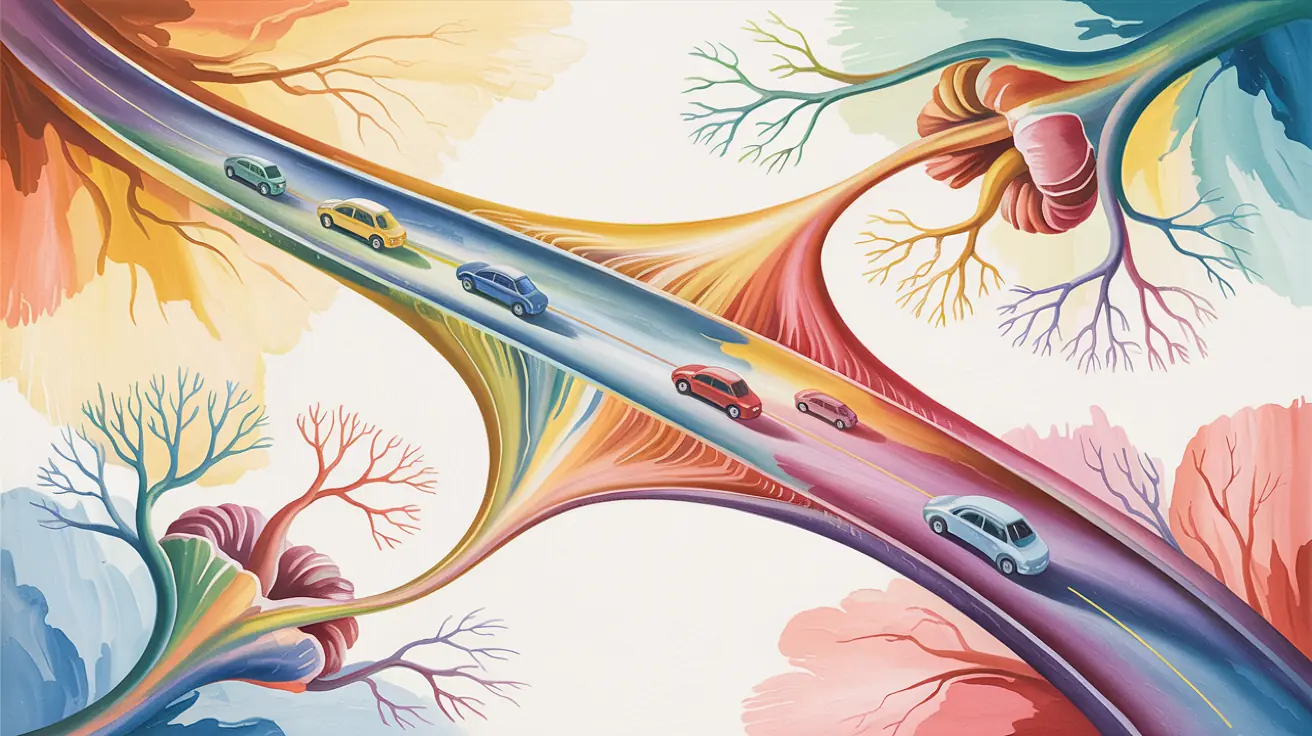
But the paper does not suggest that the two drugs were doing exactly the same thing in exactly the same way. Psilocybin looked more like fresh paving and new lane-marking: more signs of membrane-building, oligodendrocyte differentiation, and synaptic growth moving alongside myelin-related change.
MDMA looked somewhat more like structural reinforcement: stronger signs of broader myelin assembly, along with evidence of membrane turnover and repair-related remodeling.
Put another way, psilocybin seemed less like pouring more concrete and more like sending in a nimble crew to repaint lines, repair surfaces, and improve the flow of traffic so the whole system could move with better coordination.
MDMA, by contrast, looked more like a heavier reinforcement project: strengthening core structural material, even if that process involved more visible breakdown and rebuilding along the way. The difference matters because it suggests both compounds may support repair, but with different styles of intervention—one seeming to fine-tune and reorganize, the other seeming to shore up and rebuild more broadly.
Why This Changes the Picture
Neurons may carry the signal, but they are not the whole system. This study suggests that if we want to understand how psychedelic effects might last, we may need to look not only at what fires, but at what helps the brain hold its shape, keep its timing, and stay responsive afterward.
That does not make myelin the whole story but it does make the story larger.